
How California Dairies Track
Meal Breaks
Around the Clock
You’re partway through a milking when a meal break comes due. The person who could cover it is tied up, and stopping now means leaving work unfinished. By the time someone can step away, the break is late.
Then payroll comes around. Was that meal recorded? Is a premium owed? Did anyone get the employee’s account of what happened? Multiply those questions across a crew and a pay period, and one late lunch becomes a lot of work.
Worksana checks meal timing for you and flags every shift with a late or missing meal. You see which records need attention without doing the math on every shift by hand.
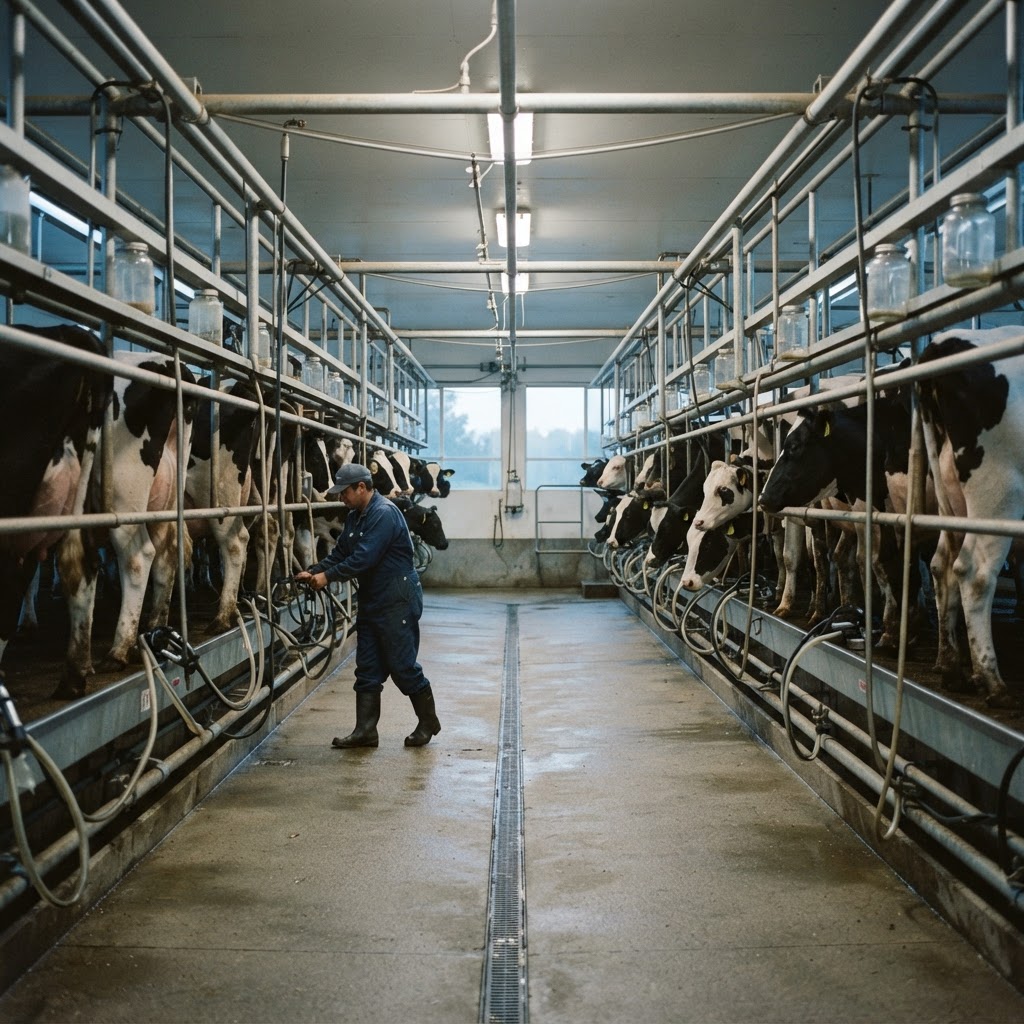
Built around the realities of dairy work.
Why timely meal breaks are hard on a dairy
Some dairies manage timely breaks consistently. Others run into the same obstacles day after day. Relief isn’t always available. A task runs long. A calf is being born, and the employee caring for it can’t simply walk away.
Employee preference matters too. On a long shift with an unusual start time, a later meal may break up the day better or fall closer to when someone normally eats. That is a real scheduling challenge, even though preference alone doesn’t change the legal requirement.
When meal exceptions become a payroll problem
We’ve worked with dairies that pay a meal premium nearly every shift and treat it as part of running the parlor. Others hold strict meal schedules and review each exception on its own. Either way, someone has to know what actually happened and make sure required pay is handled.
Leaving that to hand calculations, handwritten notes, and memory makes every payroll run harder. Leaving violations unidentified and premiums unpaid turns a difficult situation into an expensive one.
Why PAGA makes this more than a payroll headache
A missed premium can become more than a payroll correction. California’s Private Attorneys General Act, or PAGA, allows employees to seek civil penalties for Labor Code violations on behalf of the state. Claims can involve other current and former employees, and those civil penalties are separate from pay and other remedies that may also be owed.
When the same problem repeats across a crew and multiple pay periods, the exposure grows. Responding also takes time: pulling records, checking punches, and explaining what happened during shifts that are long over.
The 2024 PAGA reforms provide potential penalty reductions for qualifying compliance efforts and opportunities to cure certain violations. Those protections have conditions. Reliable records help you find problems, take action, and document the steps you took. Software alone doesn’t establish compliance or prevent a claim.
What California employers need to keep in mind
Generally, work periods over five hours require a 30-minute meal period that begins by the end of the fifth hour; workdays over 10 hours require a second meal period by the end of the tenth. Limited waivers apply. A qualifying off-duty meal requires genuine relief from duty. When an employer fails to provide a required meal period, one additional hour at the employee’s regular rate of compensation is generally due for that workday.
Employee preference alone does not waive the timing requirement. Voluntary work after genuine relief from duty is a different situation. Paying a premium does not replace the obligation to provide meal periods.
How Worksana supports dairy meal break tracking
You need a process your crew can use and your office can keep up with. Start with knowing which shifts need your attention.
See late and missing meals without checking every shift
On paper, or in a system that doesn’t flag meal issues, someone has to compare shift starts and meal punches to find late or missing meals. Across a whole crew and a full pay period, that takes time, and problems are easy to overlook.
Worksana does that checking for you. Any shift where the system detects a late or missing meal is flagged for review, and the flag is hard to miss. You go straight to the records that need attention instead of searching every shift to find them.
Record time where employees work
A shared facial recognition kiosk gives your crew a place to record work time and meal punches without filling out paper timesheets. Those punches give Worksana what it needs to check meal timing.
Send meal reminders to the mobile app
Employees using the mobile app can receive customizable push reminders for first and second meals. These reminders require the mobile app; a shared kiosk doesn’t send them.
Get the employee's account while the shift is fresh
When a meal violation occurs, an optional survey at clock-out lets the employee add context alongside the punches. You have more to work with when reviewing the flag, instead of piecing it together days later.
Handle meal premiums and keep your payroll software
You can add meal premiums after review, or enable Automatic Meal Premiums to add a one-hour Premium Pay entry to any shift with a meal penalty. Worksana exports time and premium entries for import into your payroll software, where the dollar amount is calculated.
The part software can't do
Flagging a late meal is the easy part. The hard part is deciding what your dairy’s meal policy should actually be: when the parlor can realistically release people, who covers, what happens on the shifts where it doesn’t work, and how you handle premiums when it doesn’t. That takes someone who knows how a milking schedule runs, and that’s what you get with us.
We’ve spent years on California dairies and ag operations, and we’ve helped our customers put meal policies in place that hold up on the floor, not just on paper. When you come on board, we walk through how your shifts run and help you set up a process your crew will follow and your office can keep up with.
And if an audit request or a demand letter shows up, we don’t disappear. We’re here to help you pull the records, understand what they show, and get your attorney what they need. You’ll talk to a person in California who knows your operation, not a ticket queue.
Preguntas frecuentes
Three questions dairies actually ask that nobody answers well
Our milking shifts start at 10 p.m. Does the meal clock reset at midnight?
No. Meal timing follows hours worked in the shift: the first meal period must begin before the end of the fifth hour of work, wherever your workday boundary falls. The defined workday matters for daily overtime, not for when a meal is due.
If a milker can't be relieved, can we use an on-duty meal agreement?
Only in limited circumstances. California allows an on-duty, paid meal period only when the nature of the work prevents the employee from being relieved of all duty, and only under a written agreement the employee can revoke at any time. Whether a particular position qualifies is a question for your employment counsel; it isn’t a routine fix for a short-staffed parlor.
We pay the premium whenever a meal is late. Doesn't that make us compliant?
No. The premium is what’s owed when a meal period isn’t provided; it doesn’t replace providing one. Late meals that repeat across a crew are still a pattern, and patterns are what PAGA claims are built on. What helps is a record of what happened on each shift and what you did about it.
Make meal exceptions easier to manage
You already have plenty to keep track of. Let Worksana check for late and missing meals, flag the shifts that need review, and help you handle premiums before payroll. Let’s walk through how it would work at your dairy.